Japanese Yogurt Cheesecake, Light and Airy: Step-by-Step Instructions
Instructions
- Heat the oven to 150 °C (300 °F), with a shelf in the lower third. Low heat is not a suggestion here: above about 160 °C the egg proteins set faster than the cake can rise, and the top splits.
- Butter an 18 cm (7 inch) round tin and line the base and sides with baking paper, letting the paper stand 4 cm above the rim. The batter climbs as it bakes and needs a collar to climb against. If the tin is loose-bottomed, wrap the outside in two layers of foil so no water creeps in.
- If your yogurt is at all runny, sit it in a sieve lined with kitchen paper for 30 minutes. Excess whey is the single most common cause of a soggy base. You want 500 g of yogurt that holds its shape on a spoon.
- Whisk the yolks with 20 g of the sugar, the salt and the vanilla until smooth, then whisk in the yogurt and sift in the cornflour. The cornflour is there to bind the water in the yogurt so it cannot weep out during baking. Pass the mixture through a sieve once; it takes a minute and removes every lump.
- In a clean, dry bowl, whisk the whites with the lemon juice on medium speed until foamy, then add the remaining 50 g of sugar in three goes. Stop at soft peaks: lift the whisk and the peak should curl over on itself like a bird beak. A stiff, upright peak means the meringue has gone too far and will tear the batter when you fold it.
- Stir a third of the meringue into the yogurt base to loosen it, then fold in the rest in two additions with a spatula, cutting down the middle and sweeping around the bowl. Stop as soon as the streaks disappear. Every extra fold costs you height.
- Pour the batter into the tin, tap it once on the worktop to release large bubbles, and set the tin inside a larger roasting dish. Pour boiling water into the roasting dish to come 2 cm up the side of the tin.
- Bake for 60 to 70 minutes. The cake is done when the top is pale gold, the edges have pulled very slightly from the paper, and the centre wobbles as one piece rather than rippling. A skewer should come out with a few damp crumbs.
- Turn the oven off, wedge the door open with a wooden spoon, and leave the cake inside for a full hour. Cooling it in the warm oven lets the hot air inside the crumb contract slowly, so the cake settles instead of collapsing and the surface stays unbroken.
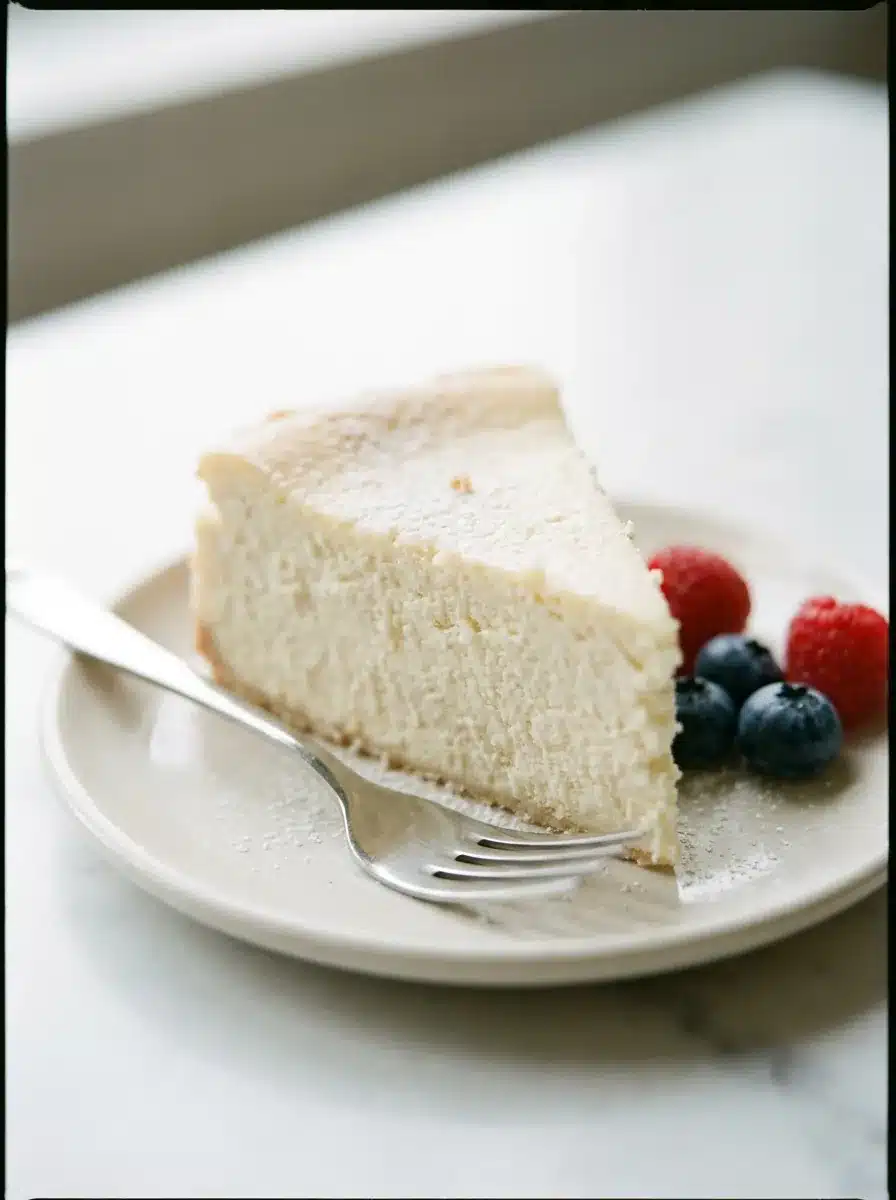
- Lift the cake out of the bath, cool it to room temperature on a rack, then chill it for at least two hours before cutting. Dust with icing sugar just before serving, through a small sieve, and cut with a hot dry knife.
Recipe Variations
Lemon. Add the finely grated zest of one unwaxed lemon to the yolk mixture and swap the vanilla for an extra teaspoon of juice. The sharpest version, and probably the best.
Matcha. Sift 6 g of matcha powder in with the cornflour. Use a culinary grade rather than ceremonial; the cheaper powder is stronger and stands up to the dairy.
Cocoa. Replace 10 g of the cornflour with 15 g of cocoa powder. The cake rises a little less, because cocoa fat weakens the foam, but the crumb is darker and more tender.
Half cream cheese. Swap 200 g of the yogurt for softened cream cheese for something richer and closer to the bakery version. Keep the total weight the same.
Individual cakes. Divide the batter between six buttered ramekins and bake them in the bath for 30 to 35 minutes. Cool them in the oven in the same way.
Dairy-light. A thick coconut yogurt works, though it needs an extra 10 g of cornflour and tastes distinctly of coconut.
Serving Ideas
Plain, cold, with nothing but icing sugar is how this cake is usually eaten, and there is an argument for leaving it there. The texture is the point, and a heavy topping buries it.
If you do want something with it, keep it sharp. Macerated strawberries, a spoonful of raspberry puree, or a few segments of blood orange all cut through the dairy. A thin apricot glaze brushed over the top gives it the glossy finish of a Japanese bakery cake.
It also earns its place at the end of a heavy meal, where a dense dessert would be too much, and it goes well with green tea, black coffee or a dry sparkling wine. For a birthday, bake it the day before, chill it overnight and dust it only at the table.
Keeping It Fresh
Keep the cake covered in the fridge for up to three days. Cover it loosely with a box or an upturned bowl rather than clingfilm pressed to the surface, which marks the top and makes it tacky.
It is better on day two than on day one. The crumb settles, the moisture spreads evenly and the yogurt tang mellows. Day three is still good; by day four the edges start to dry out.
Freezing works if you do it properly. Chill the cake fully, cut it into slices, wrap each one in baking paper and then in foil, and freeze for up to a month. Thaw in the fridge overnight, never at room temperature, or condensation will soak the surface. Dust with fresh icing sugar after thawing, as the first dusting dissolves.
Reader Questions Answered
Why did my cheesecake crack on top?
Almost always too much heat, or meringue whipped too stiff. Check your oven with a thermometer; domestic dials often run 15 to 20 degrees hot. And stop whipping at soft, curling peaks rather than firm ones.
Can I use ordinary natural yogurt?
Yes, but it must be strained. Hang 800 g of plain yogurt in a muslin-lined sieve over a bowl in the fridge overnight and you will be left with roughly 500 g of thick yogurt, which is what the recipe needs.
Do I really need the water bath?
For this version, yes. Without it the sides set long before the middle, and the cake rises unevenly then sinks. If you cannot fit a roasting dish, put a tray of boiling water on the shelf below and lower the oven to 140 °C.
Mine shrank a lot as it cooled. Is that normal?
A little shrinkage is normal and expected, perhaps a centimetre. A dramatic collapse means it came out of the oven too early or cooled too fast. Add five minutes to the bake and keep the oven door only slightly ajar.
Can I make it without sugar in the meringue?
No. The sugar is structural, not only sweetening: it stabilises the whipped whites so the foam survives the folding and the heat. You can cut the yolk sugar to 10 g instead if you want the cake less sweet.
Wrapping Up
Four ingredients, one bowl of meringue and an oven kept deliberately low. The recipe asks for patience rather than skill: fold gently, bake slowly, and let it cool in the dying heat of the oven instead of hurrying it onto the worktop.
Get those three things right and you have a cheesecake that is tall, pale, faintly tangy and light enough to eat after a full dinner. It costs a fraction of a cream cheese version and, chilled overnight, it is arguably the better cake.
Related recipes: Classic Apple Pie with a Lattice Crust, Overnight French Toast Bake with Cinnamon, Italian Pasta Salad with Mozzarella and Olives, Air Fryer Salmon with Lemon and Garlic Butter, Buffalo Chicken Dip with Melted Cheese.
Learn more: Cheesecake on Wikipedia · food storage & safety (FoodSafety.gov).
◆ ◆ ◆
← Back to Japanese Yogurt Cheesecake, Light and AiryGet new recipes
One tasty homemade recipe in your inbox each week. No spam, unsubscribe anytime.



Comments (5)