Boursin Pasta with Roasted Cherry Tomatoes
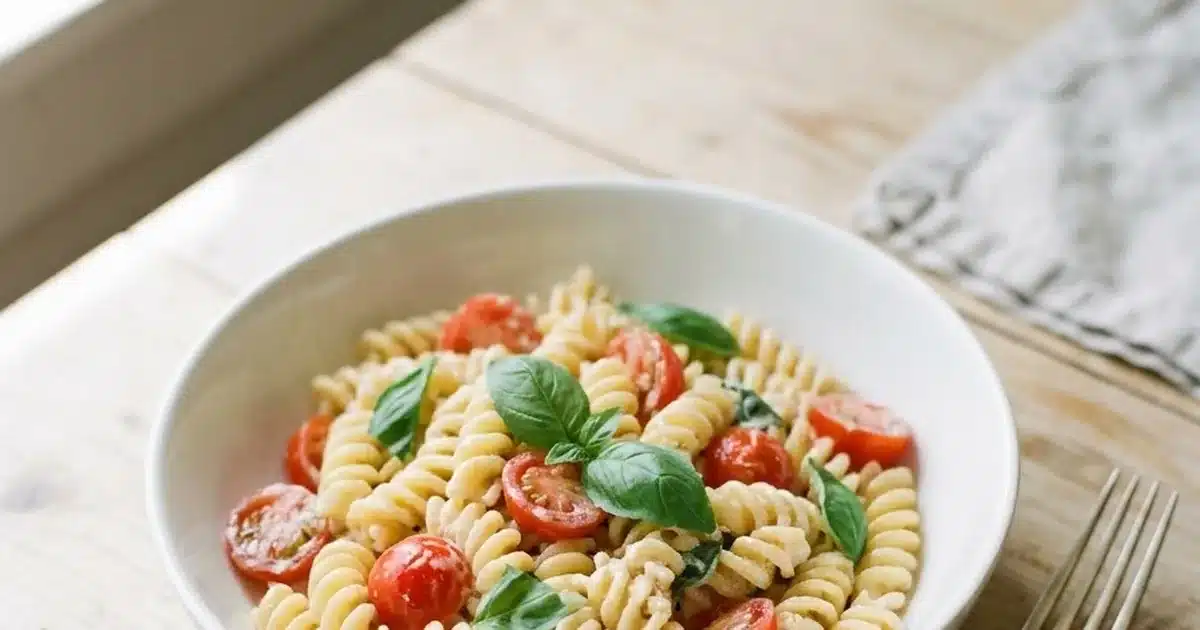
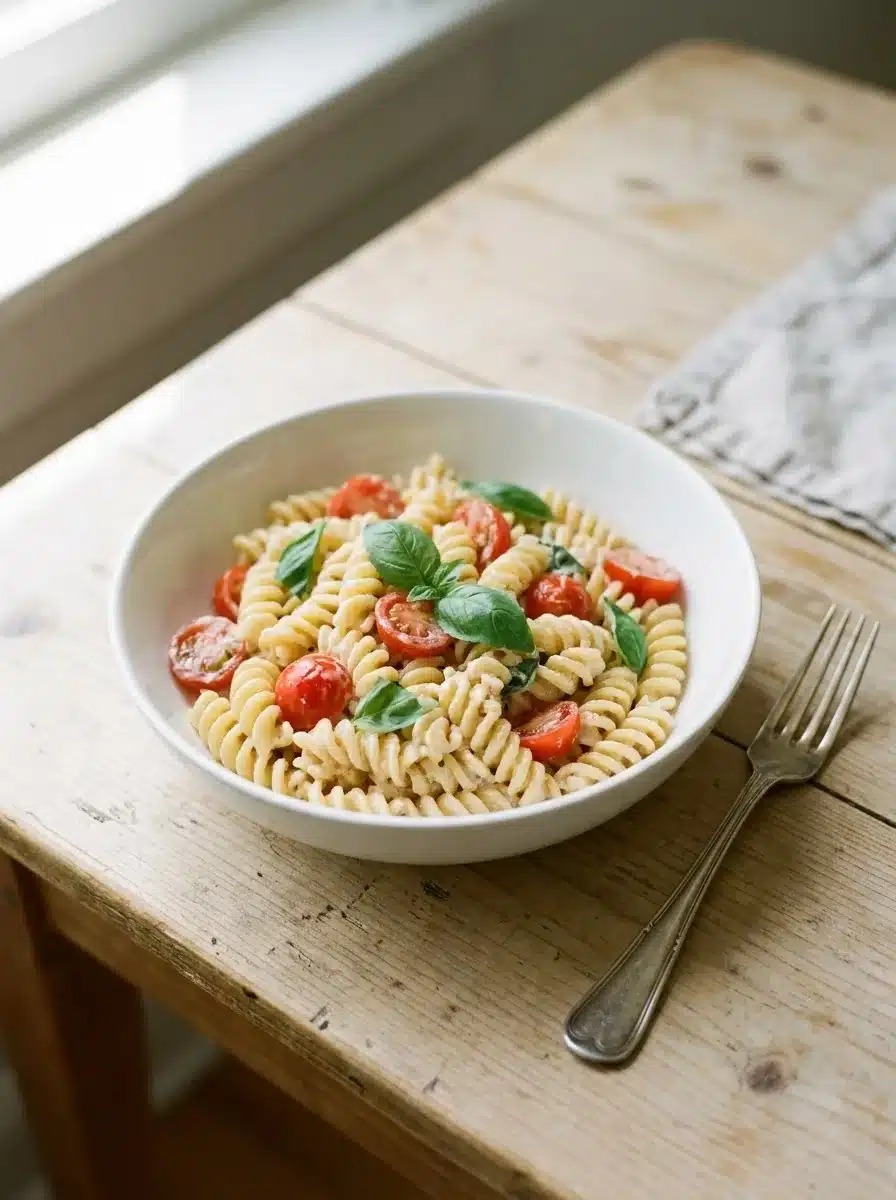
A block of garlic and herb cheese roasted with cherry tomatoes, then mashed into hot pasta with a little starchy cooking water. Dinner in 35 minutes.
A whole block of garlic and herb cheese goes into a baking dish, cherry tomatoes and peeled garlic cloves are piled around it, and the oven does the rest. Twenty-five minutes later the tomatoes have split and collapsed into their own juice and the cheese has slumped into something you can stir with a spoon. Crush it all together, tip in drained pasta and a ladle of its cooking water, and the sauce comes together in the dish in under a minute. It is one of the few pasta sauces that needs no pan, no stirring and no judgement about when it is done. Four people eat well from one block of cheese and a punnet of tomatoes.
| Prep Time | 10 | Cook Time | 25 |
| Servings | 4 | Calories | 585 kcal |
Ingredients
- 1 block (150 g / 5.3 oz) garlic and fine herbs soft cheese, such as Boursin
- 600 g (1 lb 5 oz) cherry or baby plum tomatoes, left whole
- 6 garlic cloves, peeled and left whole
- 3 tablespoons (45 ml) olive oil
- 1 teaspoon flaky sea salt
- 1/2 teaspoon freshly ground black pepper
- 1/2 teaspoon dried oregano
- 1/4 teaspoon chilli flakes (optional)
- 400 g (14 oz) short pasta: rigatoni, fusilli or penne
- 1 tablespoon (15 g) fine salt, for the pasta water
- 120 ml (1/2 cup) reserved pasta cooking water, plus more if needed
- 20 g (a large handful) fresh basil leaves
- 30 g (1/3 cup) finely grated Parmesan, optional
- Zest of 1/2 unwaxed lemon, optional
The cheese is doing three jobs at once here, which is why the shopping list is so short. It carries the fat that makes the sauce creamy, it is already seasoned with garlic, parsley and chives, and it holds enough moisture to loosen into a sauce without any cream or milk. Buy it in a block rather than a tub; the tub versions contain more water and stabilisers and tend to separate under oven heat.
Small tomatoes are not interchangeable with large ones. Cherry and baby plum varieties have thick skins and a high ratio of sugar to water, so when they split in the oven they release a syrupy juice rather than a thin one. That juice is the second half of the sauce, so resist the urge to drain any of it off.
Essential Kitchen Tools
| Baking dish (20 x 28 cm) | Roasting the cheese and tomatoes, then mixing the pasta in |
| Large pan (4 litres or more) | Boiling the pasta in plenty of salted water |
| Heatproof mug or ladle | Scooping out the cooking water before draining |
| Fork | Crushing the cheese, garlic and tomatoes together |
| Microplane or fine grater | Parmesan and lemon zest at the end |
Ceramic or glass is better than metal for the roasting dish. It holds its heat once out of the oven, which gives you a longer window to toss the pasta before the sauce starts to set.
Why This Recipe Works
The sauce depends on an emulsion: fat from the cheese and olive oil suspended evenly in water rather than floating on top of it. Fat and water do not normally mix, and if you simply poured hot water over melted cheese you would get a greasy puddle with pasta sitting in it.
Starchy cooking water is what makes the emulsion hold. As pasta boils it sheds starch granules into the water, and that water becomes a weak starch solution. Those dissolved starch molecules wrap around the droplets of fat and stop them from merging back together, exactly as an egg yolk does in mayonnaise. Agitation does the rest: thirty seconds of brisk stirring breaks the fat into small enough droplets for the starch to hold, and the sauce visibly thickens and starts clinging to the pasta instead of sliding off it. Water from the tap contains no starch at all, so it dilutes the sauce rather than binding it, which is why that mugful scooped out before draining cannot be improvised later.
Roasting rather than simmering the tomatoes is the other half of the recipe. In an open dish at 200 °C, water evaporates from the surface of each tomato faster than the inside can replace it, so the sugars and acids left behind concentrate. The skins split under the pressure and the pulp collapses. What drains out is a reduced tomato juice, not raw tomato water, and it brings sweetness and acidity that cut through the richness of the cheese.
Finally, the pasta finishes cooking in the sauce rather than in the pan. Draining it a minute early leaves it able to absorb liquid, so it soaks up seasoned sauce in its last minute instead of plain salted water. The pasta ends up flavoured all the way through, not just coated.
Pro Tips for Better Results
Match the dish to the quantity. Tomatoes should sit in one snug layer. Too much empty floor and the juices spread out and dry up before the pasta is ready.
Salt the pasta water properly. A tablespoon per four litres. Under-salted water gives under-seasoned pasta, and since the sauce itself is salty from the cheese you cannot fix it at the end without making the whole dish too sharp.
Keep more water than you think you need. Reserve 250 ml even though the recipe uses 120 ml. A sauce that tightens on the way to the table is rescued in seconds with a splash; a sauce with nothing left to loosen it is not.
Do not stir the dish while it roasts. Opening the oven and mixing drops the temperature and knocks the half-melted cheese into the juices too early, where it boils rather than softens.
Crush, do not whisk. A fork pressed down against the base of the dish gives you a sauce with texture. A whisk or a blender turns it into something smooth and oddly flat.
Add the basil off the heat. Basil leaves lose their perfume within a minute of contact with anything near boiling. Tear them in at the table if you can.
Serve immediately. This is a dish to carry straight from oven to table; it is at its best within five minutes of mixing.
Nutrition Facts (per serving)
| Calories | Protein | Carbs | Fat | Fiber |
|---|---|---|---|---|
| 585 kcal | 17g | 78g | 23g | 5g |
Calculated for one of four servings, including the optional Parmesan. Dropping the Parmesan removes around 40 kcal per serving, and using wholewheat pasta raises the fibre to roughly 11 g without changing the calories much.
Boursin Pasta with Roasted Cherry Tomatoes
A block of garlic and herb cheese roasted with cherry tomatoes, then mashed into hot pasta with a little starchy cooking water. Dinner in 35 minutes.
Ingredients
Instructions
- Heat the oven to 200 °C (400 °F, fan 180 °C). Choose a baking dish just large enough to hold the tomatoes in a single layer, around 20 by 28 cm. In a dish that is too big the juices spread thin and evaporate instead of pooling into sauce.
- Put the block of cheese in the centre of the dish and tip the tomatoes and the whole garlic cloves around it. Leaving the cheese unwrapped and whole matters: a block melts from the outside in and keeps its shape long enough for the tomatoes to finish cooking.
- Pour over the olive oil, then scatter the sea salt, black pepper, oregano and chilli flakes, if using. Shake the dish so the tomatoes roll and coat themselves rather than stirring with a spoon, which pushes the seasoning off the cheese.
- Roast for 22 to 25 minutes, until the tomato skins have split and there is a clear reddish liquid in the bottom of the dish. A few blackened patches on the tomatoes are what you want; that is concentrated sugar, not burning.
- While the dish is in the oven, bring a large pan of water to a rolling boil and add the tablespoon of fine salt. Cook the pasta for one minute less than the packet says, so it is still firm in the centre.
- Before draining, scoop out at least 250 ml of the cooking water and set it aside. This is the single step people forget, and there is no way to make it up afterwards: plain water will not thicken the sauce.
- Take the dish out of the oven and crush the cheese, the garlic cloves and about half the tomatoes with the back of a fork, working the roasting juices in as you go. Leave the rest of the tomatoes whole so there is something to bite into.
- Tip the drained pasta straight into the hot dish and add 120 ml of the reserved water. Stir hard for 30 to 60 seconds. The sauce will look thin at first and then suddenly tighten and cling to the pasta; keep going until it does.
- Add more cooking water a tablespoon at a time if it stiffens, and taste for salt. Depending on the cheese and the Parmesan it may need none at all.
- Tear in the basil off the heat, add the lemon zest and the Parmesan if using, and serve straight from the dish. The sauce is at its best in the first few minutes, before the pasta starts to drink it up.